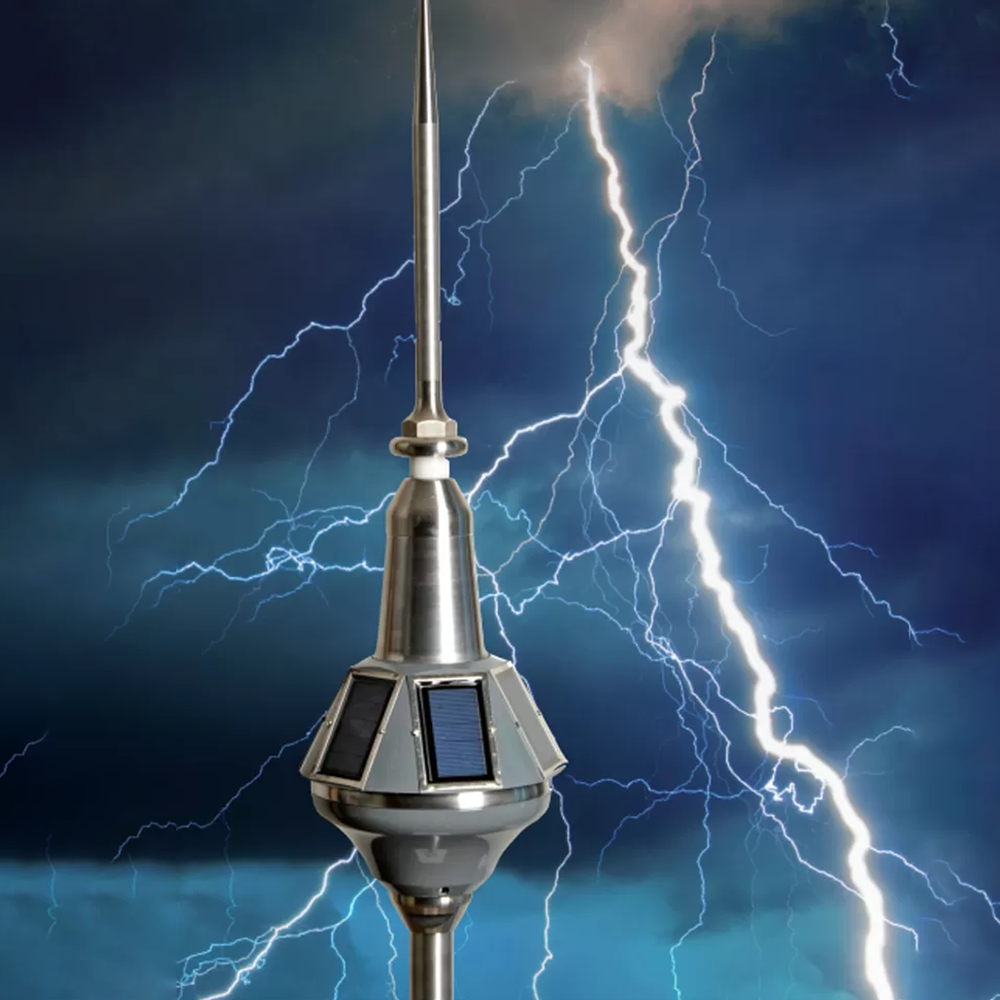
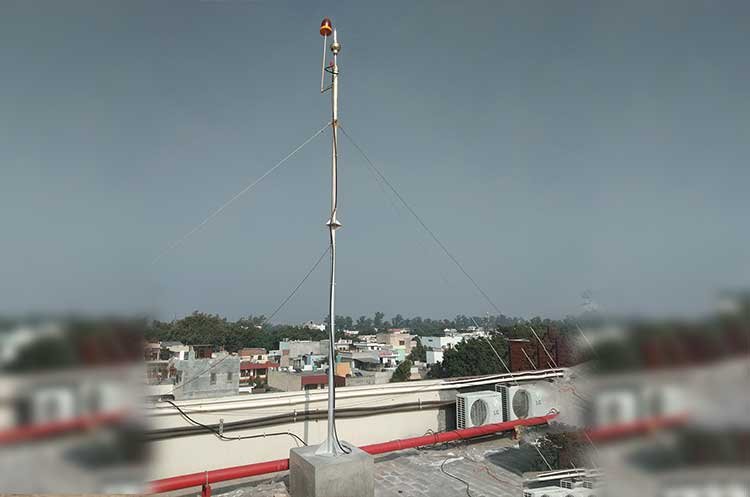
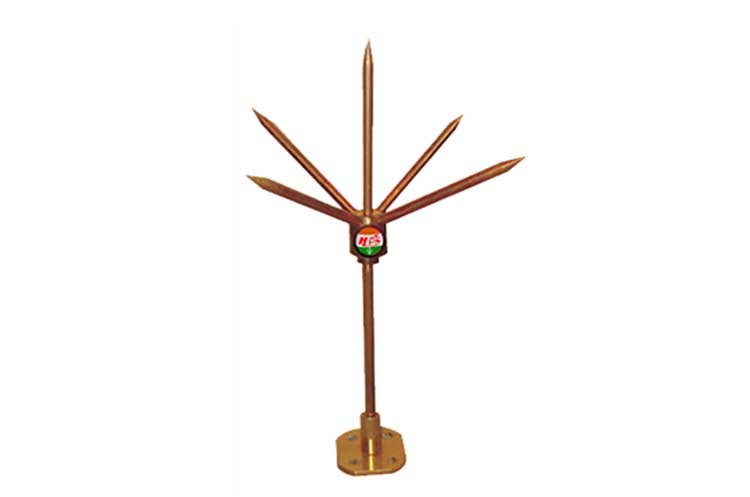
An Early Streamer Emission air terminal, also known as ESE or as an ionizing lightning rod, is an external lightning protection system with innovative technology. This ESE air terminal is also known as an active lightning rod.
At its start, the lightning bolt travels through a downward leader that propagates in jumps in any direction. When the bolt approaches the ground it can hit any object. The aim of the lightning rod is to become the point of discharge of the bolt in order to achieve a controlled impact without damage.
The ESE air terminal emits a continuous upward leader with time of advance to anticipate the descent of lightning and capture it before any other object within its protection area. The time of advance of the ESE determines the protection radius of the ESE air terminal: the more the upward leader anticipates, the higher the downward leader is captured and prevents lightning strikes in a larger area.
Traditional Spike Lightning Arrester
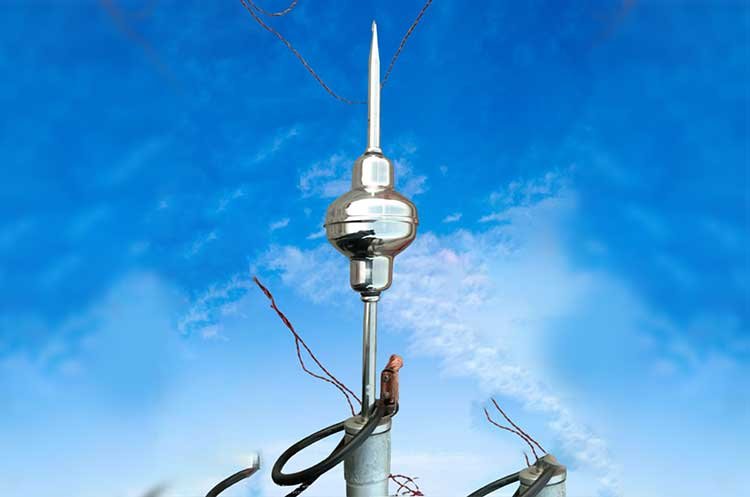
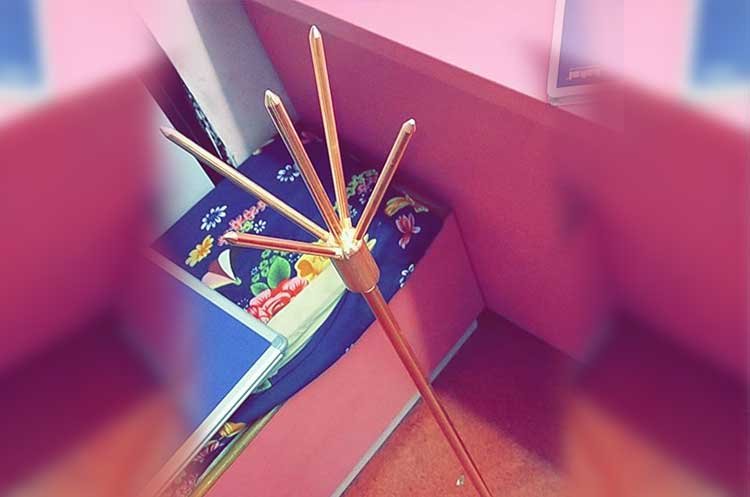
The conventional lightning arrester consists of Franklin rods. Their effectiveness is decided based on their position, morphology, materials used, and physical reaction that is performed due to the electrostatic field during the lightning.
A lightning arrestor installed on the exterior of a building can prevent structural damage to your property due to lightning and similar discharges. This can save you a huge amount of money if your property sees regular exposure to lightning due to location, materials, or other factors.
A lightning protection system consists of the following five parts: air terminals (lightning rods), conductors, ground connections (electrodes), bonding, and lightning arrestors. Lightning conductors have a pointed end which has a very small surface area. The smaller surface area ends (spikes) attract charges from the atmosphere easily. When a charged cloud passes over a lightning conductor, an opposite charge is induced in the pointed end.